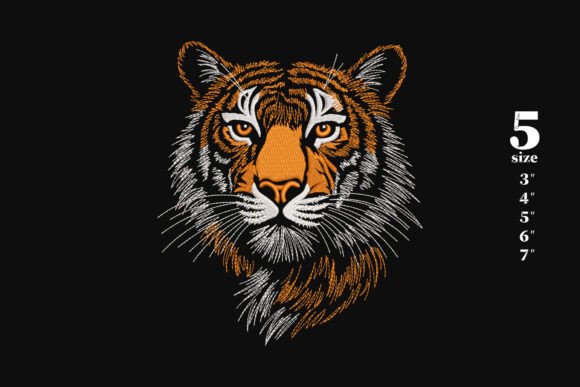
Tiger Face Embroidery Design Review
As an embroidery designer who has spent years refining digital files for commercial production, I approach every new embroidery file with a critical eye. We are not just looking for something that looks good on a screen; we need to know if it translates into a high-quality finished product that drives sales for small businesses. Today, I am reviewing the Tiger Face design from the Wild Animals category. The description promises a "beautiful," "high-quality," and "fun" design that is "easy to stitch." But does it hold up when applied to branded merchandise, uniforms, or retail items? Let’s break down its potential for your business.
First Impressions and Visual Personality
The title "Tiger Face" suggests a focal point that is bold and recognizable. In the world of branding, simplicity often wins. A full-body tiger might be too complex for small-scale applications, but a face-focused design allows for strong visual impact even at reduced sizes. Based on the description highlighting that it is "fun" and "decorative," this design likely leans toward a playful yet professional aesthetic. It feels modern enough for a trendy boutique but classic enough for a heritage brand.
For a small business owner, this versatility is key. It doesn’t scream "children’s nursery" exclusively; rather, it offers a decorative touch that can elevate home décor items, gifts, and apparel. The emphasis on being "easy to stitch" is a major selling point for efficiency. High stitch counts mean longer production times and higher costs. If this machine embroidery design balances detail with efficiency, it becomes a valuable asset in your design assets library.
Real-World Business Applications
So, where does Tiger Face fit in a commercial workflow? Here are several scenarios where this design could shine:
- Embroidered Patches: This is perhaps the strongest use case. A tiger face translates beautifully onto iron-on or sew-on patches. These patches add instant value to denim jackets, backpacks, and caps. They serve as excellent small business merch for craft fairs and online stores like Etsy.
- Staff Uniforms and Aprons: For a café, bakery, or florist with a nature-inspired theme, a subtle tiger face on the chest or apron pocket can reinforce brand identity without being overwhelming. It adds a touch of personality to custom apparel.
- Cap Embroidery: The structured front of a baseball cap provides a perfect canvas. If the design is scaled correctly, it will pop against the fabric, making it ideal for promotional hats given away at events or sold as part of a merchandise line.
- Tote Bag Design: Canvas tote bags are staples for handmade brands. A single embroidered tiger face in the center or corner creates a premium look. It turns a basic accessory into a branded statement piece that customers want to carry around, effectively turning them into walking billboards.
- Product Packaging Accents: Don’t overlook packaging. Sewing a small tiger patch onto shipping boxes or garment tags can enhance the unboxing experience, contributing to customer trust and recognition.
Strategic Brand Identity Impact
Using a distinct graphic like Tiger Face helps establish a cohesive brand identity. When customers see consistent visual elements across your handmade product lines—whether it’s on a shirt, a tote, or a gift tag—they begin to associate those visuals with quality and professionalism. This consistency boosts buyer engagement and makes your shop more memorable in a crowded marketplace.
Where to Exercise Caution
While the design is described as easy to stitch, no digitized file is flawless in every context. As a designer, I advise you to evaluate the following areas carefully before committing to large-scale production:
- Small Patch Sizes: If you plan to produce tiny patches (under 2 inches), ensure the design retains clarity. Intricate details may blur together if the stitch density is too high or if the resolution is insufficient.
- Curved Surfaces: Applying embroidery to curved surfaces like the front of a cap or a rounded bottle requires careful testing. Distortion can occur if the fabric stretches during stitching.
- Dark Uniforms and Fabric Texture: Contrast is king. On dark fabrics, you may need underlay stitches or specific thread colors to make the design visible. Similarly, highly textured fabrics like heavy tweed or loose-weave linen can distort fine lines.
- Frequent Washing: For items like work shirts or aprons that undergo frequent laundering, check the durability of the stitches. Loose threads or poor stabilizer usage can lead to pilling or distortion over time.
Practical Designer Notes for Production
Before you upload this digital embroidery file to your production queue, follow these essential steps to ensure quality control:
- Test in Black and White: Convert the design to monochrome first. This helps you assess the balance of negative space and positive stitch areas without the distraction of color.
- Check Thread Color Contrast: Ensure the selected thread colors provide enough contrast against your target fabric. A light tiger on a light background will disappear.
- Inspect Spacing and Density: Look closely at the digitization. Are there overlapping stitches that might cause puckering? Is the spacing logical for the machine to execute smoothly?
- Confirm Hoop Size: Verify that the hoop size required by the file matches your available equipment. Large designs may require multiple hoops, increasing labor time.
- Test on Real Fabric: Never skip the physical test. Stitch the design on the exact fabric type you plan to sell. Use the appropriate stabilizer to prevent shifting or tearing.
- Create a Printable Mockup: Before manufacturing, create a printable mockup to show clients or use in marketing materials. This helps visualize the final product and aids in client approval.
- Verify Commercial Licensing: Most importantly, confirm the commercial licensing terms. Ensure you have the right to sell products made with this design. If the license is unclear, assume it is restricted until proven otherwise.
Final Verdict
The Tiger Face embroidery design appears to be a versatile and efficient choice for small business owners looking to expand their merchandise offerings. Its blend of fun aesthetics and ease of stitching makes it suitable for a wide range of applications, from embroidered patches to tote bag designs. By conducting thorough tests and considering the practical aspects of production, you can leverage this design to enhance your brand’s visual appeal and drive sales. Remember, the success of any commercial embroidery project lies in the details—test thoroughly, plan strategically, and always prioritize quality in your finished product.